
Uncertainty stemming from the US-Iran conflict has significantly impacted India's mutual fund industry, leading to a sharp decline in new fund offers (NFOs) in March, despite numerous regulatory approvals. This geopolitical tension, coupled with existing market strain and distributor hesitation, has dampened investor sentiment and affected overall inflows.

Goldman Sachs has materially lowered its earnings growth forecast for Indian companies by a cumulative 9 percentage points over the next two years.
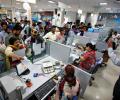
The Indian banking sector could be due for a rise in profitability after several quarters of net interest margin (NIM) compression. The Q2FY26 results suggest NIMs have bottomed out.
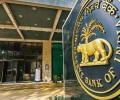
The Reserve Bank of India (RBI) announced that it processed 99.8% of applications within the prescribed timeline under its Citizen's Charter in February, demonstrating high efficiency in its operations.

Mastercard and Visa are introducing passkeys that will allow users to authenticate card payments with face scans or fingerprints, eliminating the need for one-time passwords (OTPs).

Indian rice exporters are seeking urgent government support to mitigate the impact of shipping disruptions caused by the Iran crisis and instability in key maritime routes. The disruptions have led to increased freight rates, insurance premiums, and fuel costs, impacting domestic prices and exporter profitability.

Revenue collection next financial year may be affected, and, along with this, subsidies on food and fertilisers can go up if the war in West Asia drags for long, according to experts.

Among the Sensex constituents, Asian Paints, Tech Mahindra, HCL Technologies, Tata Steel, Maruti Suzuki India, Sun Pharmaceuticals, Tata Consultancy Services, ICICI Bank, Bajaj Finance, UltraTech Cement, Mahindra & Mahindra and Tata Motors Passenger Vehicles were the laggards. However, Eternal, Titan, Adani Ports, Bharat Electronics Ltd, State Bank of India, Bajaj Finserv, NTPC and Bharti Airtel were among the gainers.

With Income Tax Act 2025 in force, your tax choice can quietly cost you big money if you're not paying attention. Ramalingam Kalirajan explains how

The Indian rupee weakened against the US dollar due to rising crude oil prices, geopolitical tensions in the Middle East, and foreign fund outflows.

Among Sensex firms, Bajaj Finance, ICICI Bank, Hindustan Unilever, Bajaj Finserv, HCL Tech and HDFC Bank were the major gainers. However, Maruti, Eternal, UltraTech Cement and State Bank of India were among the laggards.

The big question is whether Trump is any longer in command of the situation. For all practical purposes, the war seems set to cascade as the US is preparing for a potential ground operation in Iran and threatens to destroy 'bridges next, then electric power plants', points out Ambassador M K Bhadrakumar.

There are hopes of a turnaround in overall corporate earnings after six quarters of single digit growth.

The easing of external commercial borrowing (ECB) norms by the Reserve Bank of India (RBI) is expected to significantly boost overseas fundraising by Indian companies, market participants said.
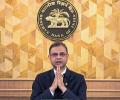
Shrugging off concerns over the depreciation of rupee, the RBI has cut interest rate by 25 basis points to 5.25 per cent in a bid to further bolster economic growth, which rose to a six-quarter high of 8.2 per cent in the second quarter of the current financial year.
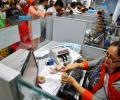
With deposit growth remaining sluggish and the credit - deposit ratio of commercial banks crossing 80 per cent, banks have ramped up their borrowing in the certificate of deposit (CD) market. In the fortnight ended November 14, CD issuances climbed to nearly Rs 55,000 crore - double the borrowings of the preceding two fortnights and the highest since the September 19 fortnight.

'Except for extremely conservative investors, others can consider allocating 10 to 20 per cent of their portfolio to small caps.'

The Reserve Bank on Tuesday proposed greater flexibility to authorised persons to undertake foreign exchange transactions for hedging their exposures, balance sheet management and market-making, as well as to ease reporting obligations, after a review of the current regulations.

Sensex and Nifty post steepest weekly loss in over a year, falling nearly 3 per cent.
A penalty of Rs 91 lakh has been imposed on HDFC Bank for violating certain provisions of the Banking Regulation Act, the Reserve Bank said on Friday. The penalty has been imposed on the private sector lender for deficiencies in statutory and regulatory compliance, including those related to Know Your Customer (KYC).

The OnePlus 15T has been officially listed in OnePlus/OPPO's China store and is set to launch on March 24, 2026, marking its entry as a compact flagship focused on performance and battery life.

Activity in the corporate bond market is set to gain momentum following a 25-bp policy repo rate cut by the rate-setting panel of the Reserve Bank of India (RBI). State-owned public cebPower Finance Corporation (PFC) and Small Industries Development Bank of India (Sidbi) are planning to raise up to Rs 11,500 crore through bonds on Tuesday as issuers expect borrowing costs to ease.

The Motor Accident Claims Tribunal (MACT) in Thane has awarded 47.28 lakh in compensation to a man who sustained severe injuries and physical disability after being struck by a speeding motorcycle in 2017.

Realme has introduced its new Realme Narzo Power 5G handset in the Indian market, highlighted by an enormous 10,001mAh power unit.

Shrugging off concerns over the depreciation of rupee, the RBI has cut interest rate by 25 basis points to 5.25 per cent in a bid to further bolster economic growth, which rose to a six-quarter high of 8.2 per cent in the second quarter of the current financial year.

Trump may strike. He may announce productive talks and extend again. He may do both at the same time. Iran will not open the Strait on someone else's terms, so no matter what happens, that problem will remain unsolved. And the IRGC will still be collecting its $2 million toll from every ship bold enough to ask permission to pass.

Benchmark BSE Sensex fell 558 points on Thursday amid heavy selling in IT shares, as concerns over AI-led disruptions and waning hopes of a Fed rate cut after firm US economic data weighed on investor sentiment.

'The next phase of India's IPO cycle will be defined by quality, pricing discipline and investor selectivity.'

Wholesale price inflation extended upward momentum for the third straight month, at 1.81 per cent in January, driven by an uptick in prices of food, non-food articles, and manufactured items on a month-on-month basis, government data showed on Monday.
Benchmark lending rates unchanged with repo rate at 5.25%
Fitch Ratings has affirmed ICICI Bank's ratings at 'BB+' with a negative outlook and retained the lender's viability rating at BB. The negative outlook comes despite the agency recently revising upwards the operating environment outlook of domestic banks to stable from negative, citing better than expected recovery in business and economic activity following the COVID-19 second wave. Economic momentum and regulatory measures should support modest improvements in the domestic banks' financial profiles over the next 12-24 months, even though challenges remain the agency said in a late Monday note.

Google has unveiled the Pixel 10a in India and worldwide, expanding its Pixel series. The device can be pre-ordered through the brand's online store and an e-commerce platform, with sales starting next month.

The Reserve Bank of India (RBI) on Monday realigned the bank rate to marginal standing facility (MSF) rate in one-time technical adjustment. The bank rate now stands at 9.5 per cent as against six per cent earlier.

The reduction in the number of loan accounts and the outstanding amount during the last financial year is a cause of concern and stress for microfinance institutions (MFI), Secretary, Department of Financial Services, M Nagaraju said on Thursday, highlighting "inefficiency" in MFIs that leads to higher rates of interest.

Gold prices fell by Rs 400 to Rs 1.6 lakh per 10 grams in the national capital on Thursday amid weak global trends and receding expectations of an interest rate cut by the US Federal Reserve.

rediffGURU T S Khurana answers readers' personal income tax queries

'Credit growth in India remains in double digits, even though corporate borrowing is subdued.' 'Corporate credit is weak because companies are cash-rich and cautious amid global uncertainty.'

The rupee declined 31 paise to settle at 90.65 against the US dollar on Friday, weighed down by geopolitical uncertainties over the US-Iran talks, and a sharp rise in global crude oil prices.

Gold prices are expected to remain volatile next week as investors track geopolitical developments in the Middle East and key macroeconomic data releases that could shape the sentiment in the domestic market, analysts said.

'Uncertainty level A in the morning, uncertainty level B in the afternoon. If I answer about tariff rates now, I'll be outdated by the evening.'
 © 2026 Rediff.com - Advertise with us - Disclaimer - Privacy Policy - Sitemap - Feedback - About us - Terms of use - Grievances